Time and time again I hear from parents who can’t understand why it seems impossible for them to teach multiplication tables to their dyslexic kids. They say state trying to get their child to memorize the multiplication table and other math facts is impossible. The kids are stumped and the parents are pulling their hair out in frustration not knowing how to help.
Teaching Multiplication Tables to Dyslexics
Rote memorization can be quite difficult for many dyslexics. Some schools use manipulatives when teaching multiplication, but require kids to move quickly to rote memorization for the times tables. Others use rhyming and clapping: a method, which asks a picture thinker to think with the sound of words, something that does not come naturally to them.
What picture thinkers (dyslexics) need is the ability to see the groups of numbers that they are quickly adding together (aka multiplying). Slow the process way down for them; it will take more time at first, but soon they will be able to see the patterns and understand multiplication, empowering them with math through the grades.
Here is an example: 4 X 6
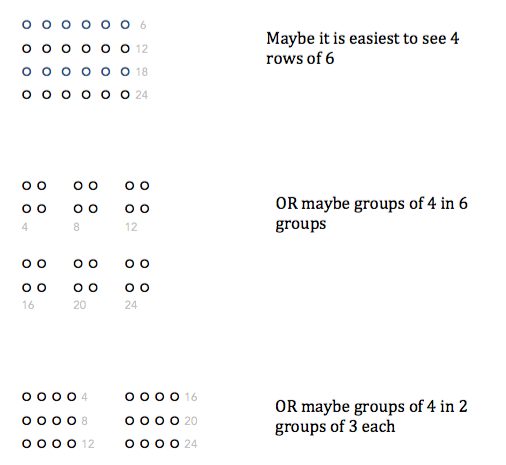

A students ‘picture’ of 6 x 4! Learning his 6 math facts in the way that works for him!
Making groups out of manipulatives (I use colored rocks or “jewels” as I call them) provides the student a picture they created and can work with; also reinforcing the answer to the multiplication fact/groups which come before 4×6, i.e. 4×5, 4×4, 4×3, 4×2, 4×1.
The exercise should be done by the student when they are focused and can spend time playing with the manipulatives; arranging the items in a grouping that works for them and allowing them to visualize the multiplication process (adding of equal groups). When they get the grouping the like (one that makes the most sense to them and they can quickly see) then they need to take a mental picture of the group and label that as 4 x 6. They can even say aloud to the group, you are 4 x 6 and when I see you I will know you equal 24.
I like to have my students show me how they visually see amounts (see photo below), then I tell them to keep that view of the number and use those visuals and grouping when they do are learning their times’ tables. This way they can recreate the visual in their minds and actually count to get the correct answer if they can’t remember it.

A students visual of amounts.
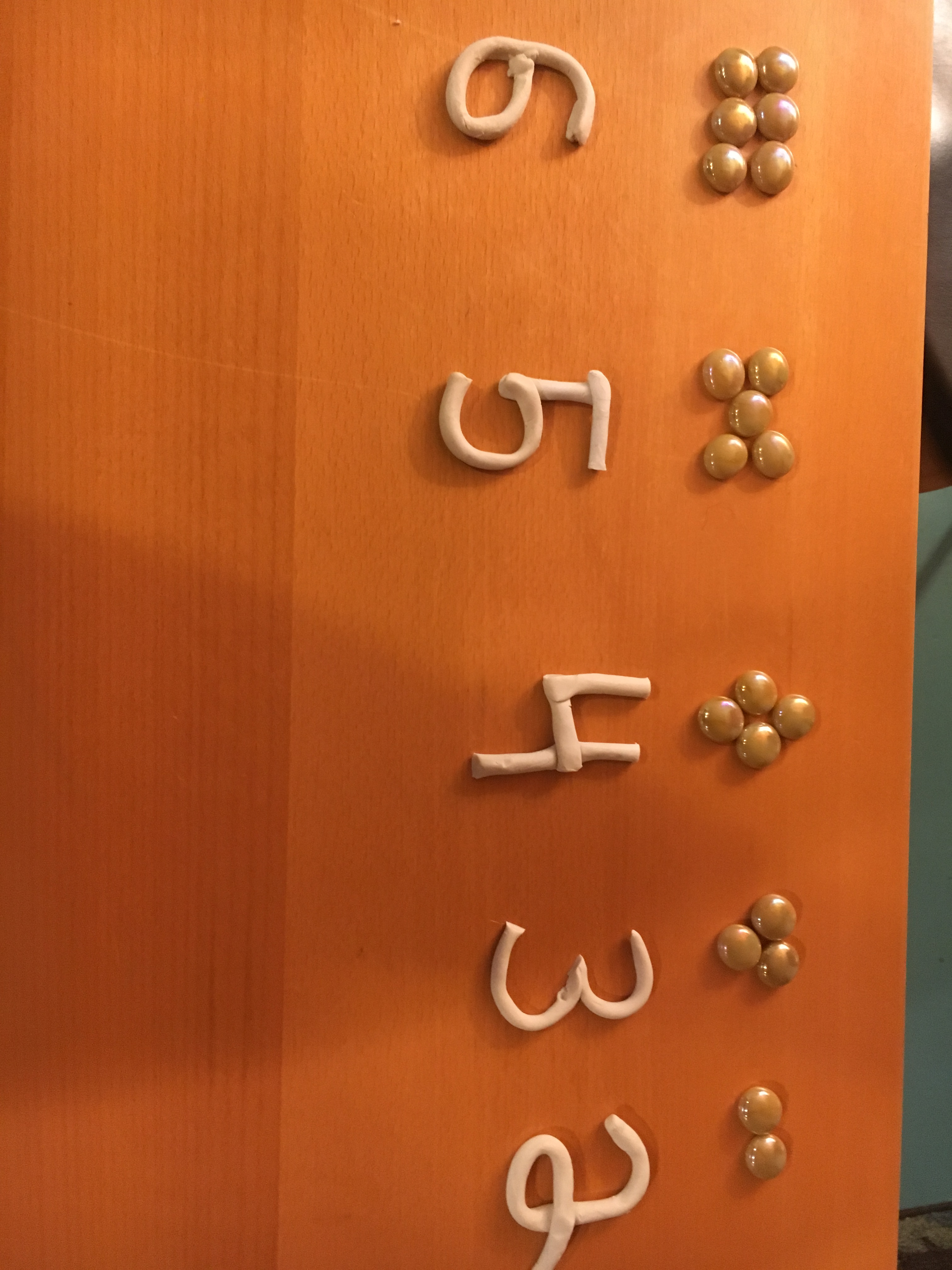
A visual picture of numbers 5, 4, 3, and 2.